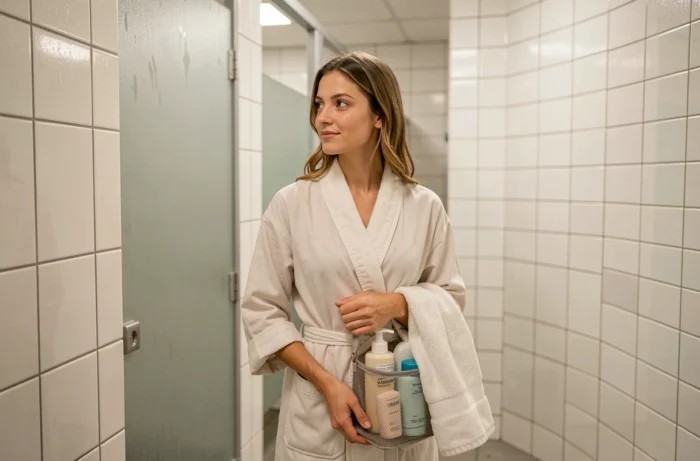
The shared shower in a youth hostel remains the number one friction point for regular travelers. The issue is not about modesty, but rather recurring technical defects: insufficient ventilation, floors that never dry, advertised equipment that is out of service. We review the concrete aspects that make the difference between a bearable experience and a stay ruined by sanitary logistics.
Ventilation and hygiene of communal showers: technical criteria to check
A poorly ventilated shower block generates persistent humidity, mold on the joints, and a constantly slippery floor. The quality of ventilation determines the actual level of hygiene of a shared bathroom, much more than the displayed cleaning frequency.
We recommend checking three elements before booking. First, the presence of mechanical extraction (VMC or wall extractor) in the sanitary block, and not just a window. Next, the type of flooring: a non-slip tiled floor with narrow joints dries faster than a smooth resin floor. Finally, the disinfection of frequently touched surfaces (faucets, cabin handles, curtains).
Recent feedback on several hostels indicates that the recurring problems of communal showers are directly linked to the accumulation of mold and wet floors. Specialized advice recommends asking the hostel about the frequency of cleaning and the quality of ventilation before arrival.
Specifically, digging into the communal shower in a youth hostel in recent reviews provides a more reliable picture than the official establishment sheet. Look for mentions of “mold,” “standing water,” or “odor”: these are immediate warning signals.
Actual availability of shower cabins: don’t rely on announced numbers
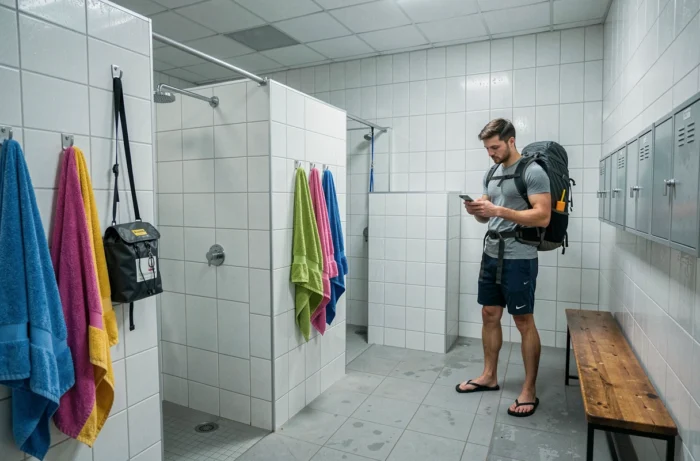
The number of cabins announced does not always correspond to the actual capacity. A recent review of the Livemax Hostel Kyoto Station reports that one of the seven cabins was out of service, leaving six usable showers, with no wait during the stay. This type of situation is common.
For a dormitory of eight to twelve beds, we consider a ratio of one functional cabin for four travelers to be the minimum acceptable. Below that, queues during peak hours (between 7 AM and 9 AM, then between 10 PM and midnight) become systematic.
The reflex to adopt: read reviews published in the last three months looking for the terms “wait,” “line,” “out of service,” or “broken.” A review from two years ago no longer reflects the state of the facilities. Renovations and degradations change the situation in just a few months.
Included or paid amenities in hostels: what to bring
The variation in amenities among well-rated hostels is considerable. Some provide shampoo, conditioner, shower gel, and hairdryers. Others charge for towels or offer no toiletries at all. Checking the amenities section and writing to the hostel before arrival is more reliable than assuming anything.
Here is the basic kit we recommend bringing:
- A pair of flip-flops or rubber sandals dedicated to the shower, to avoid direct contact with a floor potentially contaminated by fungi
- A quick-drying microfiber towel, which does not mold in a backpack even when packed wet
- A travel-sized toiletry kit (solid shampoo or mini-bottles), as wall dispensers are often empty or of poor quality
- A padlock for the dormitory locker, necessary to secure belongings during the shower
This kit fits in less than one liter of volume and avoids the majority of inconveniences reported by hostel travelers.
Time management and organization in shared dormitories
The comfort under a communal shower depends as much on personal logistics as on the quality of the facilities. Shower outside peak times: mid-morning or early afternoon offers nearly empty sanitary blocks in most hostels.
Prepare all your necessities before entering the cabin. Searching for a product in your bag while others wait creates unnecessary tension and prolongs occupancy. A waterproof bag hanging on the cabin hook with all your items (clean clothes, towel, products) allows you to dress on-site and quickly free up space.
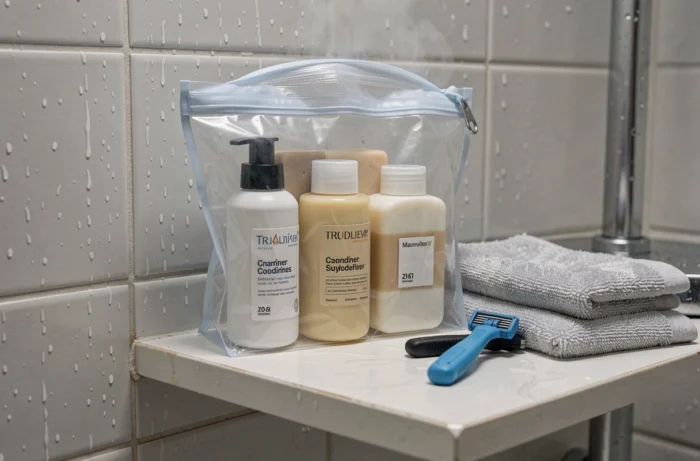
For travelers staying multiple nights, identifying the operation of the block (actual number of cabins, off-peak hours, locking system) from the first evening saves time throughout the stay.
Safety and privacy in hostel communal showers
Individual cabins with interior locks have become the norm in recent urban hostels. However, in older establishments or rural youth hostels, open configurations with a simple curtain can still be found.
Two points deserve attention:
- Check that the cabin has a dry area separate from the shower zone, even if small, to place clothes and towels away from splashes
- Ensure that the lock works properly from the first use. A broken lock should be reported immediately to the reception
- Prefer hostels that physically separate sanitary blocks by gender or that offer fully enclosed cabins from floor to ceiling
The quality of partitioning and locking of cabins is rarely included in official descriptions. Photos posted by travelers on booking platforms provide a much clearer indication than marketing text.
Staying in a dormitory with a shared shower relies on a few targeted checks before booking and a suitable personal kit. The actual state of the sanitary facilities is reflected in recent reviews, not in descriptive sheets. A traveler arriving with flip-flops, a microfiber towel, and who knows the off-peak hours of the shower block turns a logistical constraint into a simple routine.