
The transfer market of ASM Clermont is not just a list of names circulating on social media. Behind every rumor, there is a balancing act between extending contracts for young players trained at the club, salary cap constraints, and the reorganization of the coaching staff. This article assesses the balance between these three levers for the 2027-2028 season.
Reorganization of the coaching staff in Clermont: what changes the recruitment game
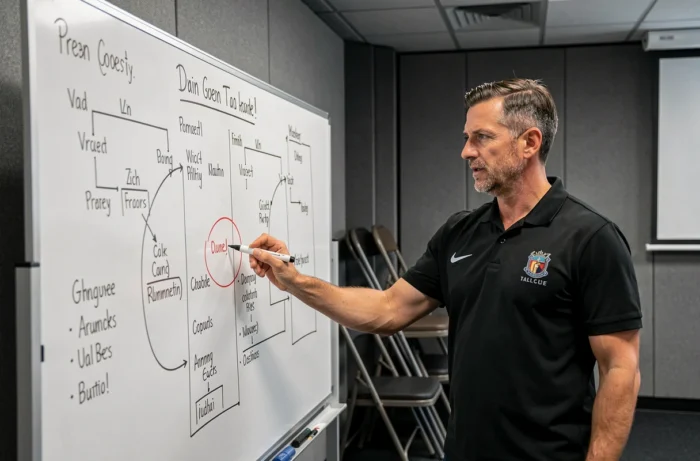
Even before discussing players, the Clermont transfer market is played out in the offices. Christophe Urios has been extended but will no longer hold the position of manager: he will become the sports director. Joe El-Abd has been appointed head coach starting in 2027.
This change in governance directly alters the recruitment process. A sports director guides medium-term choices, while the head coach expresses immediate tactical needs. The ASM press conference left the future of Aurélien Rougerie, who has been in charge of recruitment, in suspense, adding a layer of uncertainty to ongoing negotiations.
When following transfer rumors at ASM Rugby, one realizes how much the stability of the staff conditions the club’s credibility with potential recruits. A targeted player wants to know who will play him and in what system.
Salary cap 2027-2028 and international credits: the financial framework of ASM’s transfer market
The regulatory framework has changed. The LNR has stipulated that starting from the 2027-2028 season, international credits will be allocated without prior club presence conditions. In practical terms, an international player recruited mid-season immediately generates a credit, whereas previously, prior presence had to be justified.
This evolution changes the calculations. For a club like Clermont, which has a pool of players likely to be called up to the French national team, the salary maneuvering room potentially widens from the first year of an international recruit’s contract.
| Parameter | Before 2027-2028 | From 2027-2028 |
|---|---|---|
| International credits | Condition of prior club presence | Immediate allocation |
| Impact on recruitment | Advantage to clubs retaining their internationals | Possibility to recruit an international and benefit from the credit from the first season |
| Consequence for ASM | Limited margin on external international profiles | Increased flexibility to target internationals from other clubs |
This table sheds light on a point often absent from discussions about rumors: the club’s actual financial capacity to finalize a transfer depends as much on regulations as on the gross budget.
Extensions and training: ASM’s retention strategy
The announced departures of Régis Montagne and Léon Darricarrère to Toulon for 2027-2028 have prompted reactions from supporters. The club’s response was swift on another front: retaining the next generation.
Axel Guillaud has extended his contract until 2030, securing the fullback position for the long term. Four other prospects have also extended:
- Matéo Frisach, who is establishing himself within the professional squad
- Baptiste Veschambre, whose progress in the first team justified an early commitment
- Léo Michaux and Timéo Frier, two profiles identified as medium-term successors
This wave of massive extensions is significant. It signals that ASM is building its squad around a core developed internally, rather than solely through external arrivals. Each extension also frees up budgetary visibility: a player trained at the club costs less in salary mass than an external recruit with an equivalent profile.
Arrival of Grégoire Arfeuil: what this transfer reveals about Clermont’s priorities
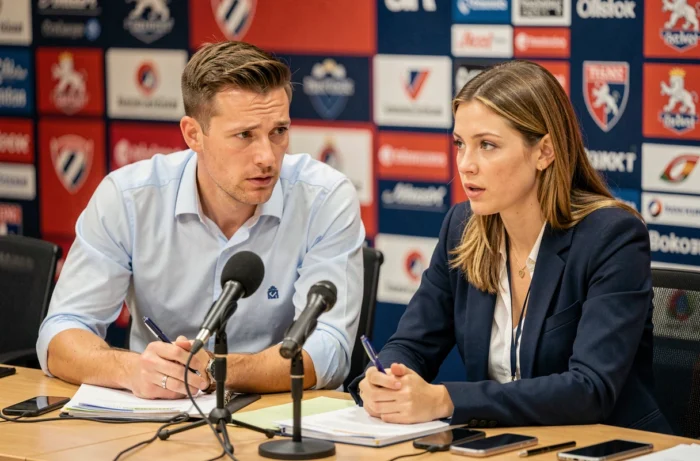
The official signing of Grégoire Arfeuil, winger from Section Paloise, until 2030 is the most commented movement of the Clermont transfer market. This is not a circumstantial recruitment.
A four-season commitment for a winger coming from a Top 14 club reflects a desire to invest in a specific position. With the announced departures in the backline, the club needed to strengthen its depth on the wings.
Christophe Urios himself commented on this signing by stating that it was “just the beginning,” implying that other movements will follow. This statement fuels speculation, but it can also be interpreted as a message to players already under contract: the club recruits to win, not just to compensate.
What the rumors don’t say about Clermont’s recruitment
Rumors circulate on social media without filters. A name associated with Clermont on a Tuesday can find itself linked to Toulouse by Friday. Three elements help distinguish a serious lead from mere hearsay:
- The duration of the contract mentioned: a commitment of three or four years suggests advanced negotiations, not just initial contact
- Consistency with departures: each recruit corresponds to a vacated position or an identified tactical need by the new staff
- Compatibility with the salary cap: without budgetary room, no rumor materializes, regardless of the talent of the targeted player
The ASM transfer market for 2027-2028 is thus read through three overlapping frameworks: the overhaul of the staff, the regulatory evolution of the salary cap, and the policy of extending young players. Grégoire Arfeuil and the five announced extensions outline a squad whose backbone is already in place. The coming weeks will reveal whether the still unofficial leads turn into signings, but the framework in which they fit is already established.