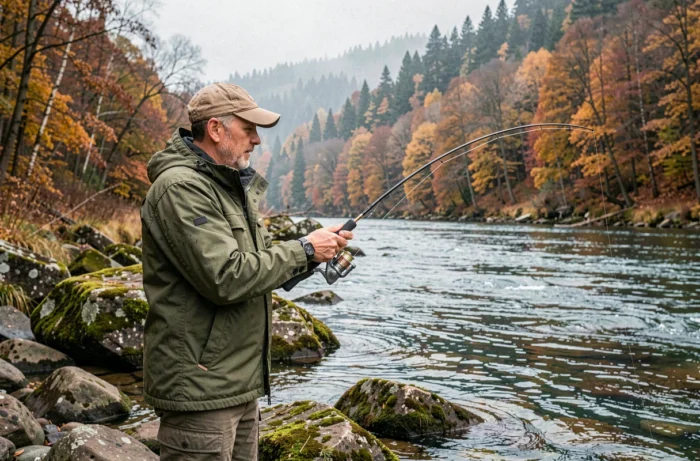
Recreational fishing is undergoing a period of rapid changes. Between environmental constraints, new regulatory obligations, and technical evolutions, anglers who do not keep up with the trends in the online fishing world risk missing out on changes that directly affect their outings by the water.
Drought and low water levels: what French waterways are really experiencing
Have you noticed that some of your usual spots have been lacking water for a few seasons? The phenomenon goes beyond a simple local impression. The French Office for Biodiversity (OFB) reports that the low water levels in small streams have reached an unprecedented level in fifteen years of monitoring. Fish are dying due to lack of water and oxygen, sometimes by the tens of tons across the territory.
For freshwater anglers, the consequence is direct: temporarily closed fishing areas, weakened populations of trout or roach, and degraded fishing conditions even when the watercourse is not completely dry. Low flow concentrates fish in residual pools, making fishing technically possible but ethically questionable when the animals are already under thermal stress.
In Burgundy, pond fish farmers report uncertain harvests and drainages complicated by water restrictions. Several fishing companies have postponed restocking operations because the recipient water bodies no longer offered favorable conditions for the survival of the released fish. Restocking without sufficient water amounts to wasting fry.
Keeping track of these developments over the weeks allows anglers to adapt their outings. For those who want to stay informed in real-time, My Fish Book news regularly covers the state of aquatic environments and its consequences on fishing practices.
Fishing regulations 2026: two obligations to know
Regulations are evolving on two distinct fronts, and ignoring them exposes one to concrete sanctions.
Declaration of eel catches in freshwater
The Council of State has ruled that the existing system does not set the necessary obligations for amateur anglers regarding the declaration of eel catches. It has ordered the government to take the corresponding texts within six months. Translation: a mandatory declaration framework for captured eels will be imposed on recreational freshwater anglers.
The European eel has been subject to protection measures for years. What is changing is the transition from a vague obligation to a precise text, with declaration modalities that should be published soon. Every angler fishing in areas where eels are present must anticipate this constraint.
Digital declaration of sea catches
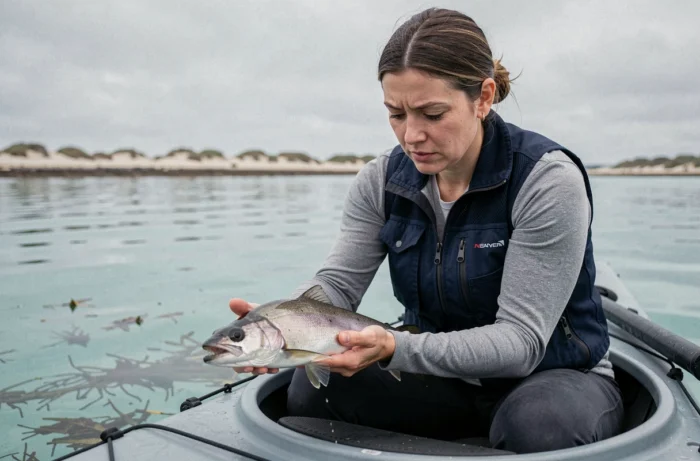
Recreational sea fishing now comes with a digital declaration of certain catches. This system concerns targeted species and aims to better quantify the pressure of recreational fishing on stocks. The digital format simplifies the process compared to a paper logbook, but it requires having the appropriate application or platform before heading out.
- Check the species subject to declaration in your fishing area before each sea outing.
- Download the digital declaration tool recommended by your federation or the Fisheries Committee.
- Keep your declaration receipts: in case of a check, they serve as proof.
Competitions and fishing events in France: what drives the season
The French competitive scene remains particularly active. The Carna’Der 2026 at Lake Der saw the Michaud family retain their title, confirming their consistency on this technical water body. In feeder fishing, Yvon Houssais won the title of Masters Feeder World Champion 2026 in Portugal, a performance that highlights the quality of the French match fishing school.
On the youth front, Florian Reigner, at 17, has moved from the Junior Fishing Tour to the Mercury Fishing Cup. This type of pathway illustrates how youth circuits now feed into adult competitions, with smoother transitions than a few years ago.
The SIPAC 2026 in Amiens, scheduled for November, remains the event dedicated to match fishing. This fair allows for testing equipment, exchanging with competitors, and discovering new products from manufacturers before the next season.
Trends in fishing gear and online techniques: what is changing the practice
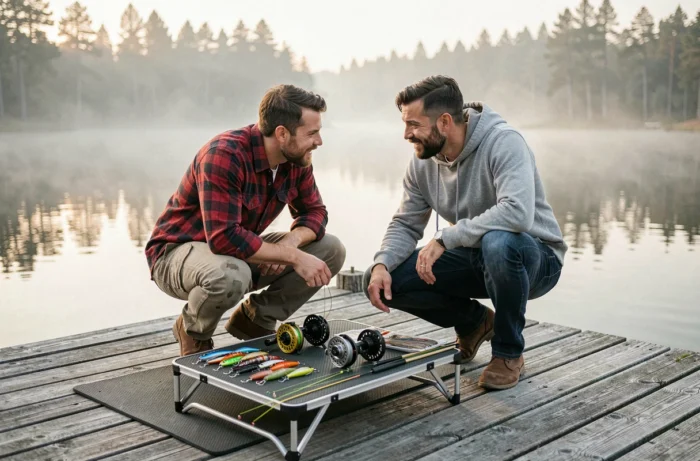
The method feeder continues to gain ground in freshwater. Test batches involving several dozen rods dedicated to this technique circulate in specialized press, a sign that the offering has significantly expanded. For an angler starting with this approach, choosing a suitable rod depends on a few simple criteria:
- The length (generally between 3 and 3.60 meters) determines the casting distance and fighting comfort.
- The power of the tip must match the weight of the loaded feeder, or else there will be repeated breakages.
- The sensitivity of the quiver-tip (the interchangeable tip) conditions the detection of subtle bites, typical of wary whitefish.
On the digital side, anglers are increasingly using online platforms to share outing reports, locate open fishing areas, and monitor hydrological conditions. Checking the flow of a river before heading out avoids unnecessary trips, especially in a context of recurring droughts.
Camera traps, originally designed for hunting, are also finding their place by the water. Setting up a camera near a fishing spot allows for observing fish activity and the frequency of a spot without being physically present. This is still a marginal use, but it appeals to carp anglers looking to identify activity windows on large water bodies.
The 2026 season confirms that fishing in France is evolving under the dual pressure of climate and regulation. Anglers who adapt their practices, choose their spots based on the actual state of the environments, and respect the new declaration obligations will continue to find pleasure by the water. Those who ignore these signals risk facing disappointments, whether from degraded spots or unexpected checks.