The green bean is classified among the fruit-vegetables in lunar gardening: its harvested part (the pod) results from flowering, which determines the type of favorable day for sowing. Understanding this classification allows for the correct reading of a lunar calendar and identifying the truly useful slots for sowing in 2026, a year marked by a structurally warmer and drier spring than average.
Fruit days and ascending moon: two criteria to cross for sowing green beans
A lunar calendar is based on two overlapping reading grids. The first distinguishes fruit, leaf, root, and flower days according to the position of the Moon in front of the zodiac constellations. For green beans, it is the fruit days that matter: the Moon then passes in front of a fire constellation (Aries, Leo, Sagittarius).
The second grid concerns the apparent movement of the Moon on the horizon. In ascending moon, the sap is said to favor the aerial part of plants, making this phase conducive to seed sowing. In descending moon, the focus is more on soil work (planting, transplanting, pruning).
To know when to sow green beans with the moon in 2026, one must identify the days when these two parameters overlap: a fruit day in ascending moon. These windows occur approximately every 27 days but last only two to three consecutive days.
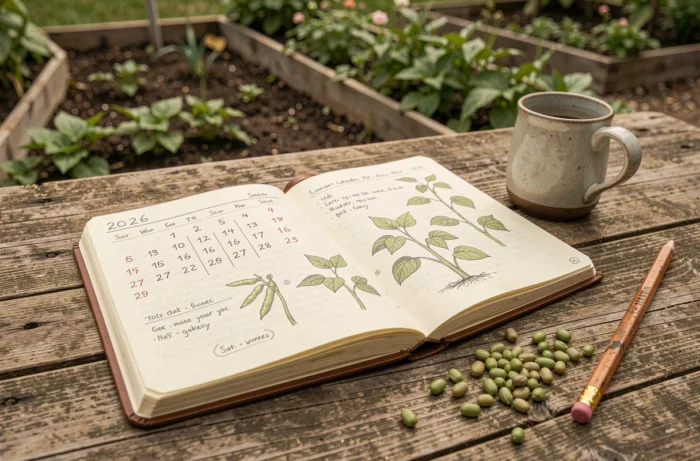
Lunar sowing windows for green beans between April and July 2026
The green bean germinates when the soil reaches at least 12 °C at depth. Under most French climates, the realistic sowing period extends from late April to mid-July. Phenological observations for 2026 show an average advance of 6.6 days in vegetative start compared to the average of the last twenty years, which places the beginning of the season significantly earlier than usual.
Why not all lunar windows are equal
A fruit day in ascending moon that falls at the end of April may coincide with soil that is still too cold in the north or at altitude. Conversely, an ideal lunar slot in mid-July 2026 may expose young plants to an intense heat episode: climate analyses from Météo-France indicate a trend of spring warming of about +0.3 °C per decade since 1959, and summer heatwaves now occur earlier in the year.
Crossing the lunar calendar with local weather remains more reliable than following the Moon alone. A sowing done on a root day but in well-tempered and well-watered soil will yield better results than a sowing on a perfect fruit day in dry and scorching earth.
Adapting the calendar to the dry context of 2026
Spring 2026 presents a precipitation deficit of about 30%, placing it among the ten driest since 1959. For green beans, two precautions are necessary:
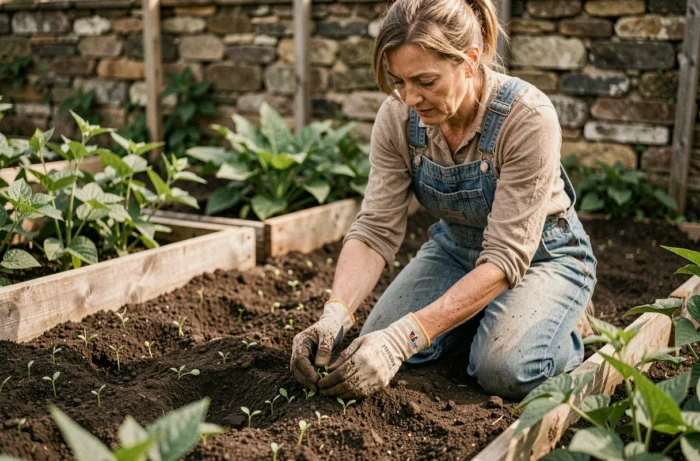
- Water the furrow the day before sowing to ensure sufficient moisture for germination, even if the lunar day is favorable.
- Mulch as soon as they emerge to limit evaporation, particularly on sowings in June and July exposed to the first heat waves.
- Prefer lunar slots in May over those in April if the soil remains dry, as sowing in dust will not germinate, regardless of the lunar phase.
Avoidance days: lunar nodes, perigee, and apogee in 2026
Lunar calendars also indicate periods when any sowing is discouraged. Three cases recur each month:
- Lunar nodes correspond to the moments when the Moon’s trajectory crosses the plane of the ecliptic. Lunar gardeners recommend avoiding any intervention in the vegetable garden during the hours surrounding a node.
- Perigee (Moon closest to Earth) is associated with growth considered too rapid and fragile. Plants sown at this time would be more susceptible to diseases.
- Apogee (Moon farthest away) is regarded as a day of low vitality, not conducive to germination.
In practice, these days reduce the useful windows of each month. In a favorable lunar slot of three days, a lunar node can eliminate one. For green beans, whose sowing period is already constrained by soil temperature and drought, every remaining favorable day counts.
Warm soil and cold Moon: deciding when the two calendars diverge
The typical situation in 2026 illustrates a frequent case: the soil is ready before the lunar calendar offers a fruit day in ascending moon. Should one wait for the right lunar phase or sow when the soil conditions are met?
No published agronomic study has demonstrated a statistically measurable effect of the lunar phase on the germination of beans. Gardening with the Moon is based on an empirical tradition passed down through generations, and many gardeners attribute good results to it. The risk of missing a favorable weather window is, however, very real, especially in a drought context where slots of sufficient moisture are becoming scarce.
A pragmatic approach is to sow the majority of green beans when the soil and weather allow, then reserve a small plot for a sowing aligned with the next fruit day in ascending moon. This comparison, repeated over two or three seasons, provides concrete indications tailored to each garden.
Spring 2026, with its phenological advance and water deficit, encourages not to wait for the perfect lunar date if the soil is already warm and rain has just fallen. The pod does not wait for the Moon to germinate; it waits for water and warmth.